
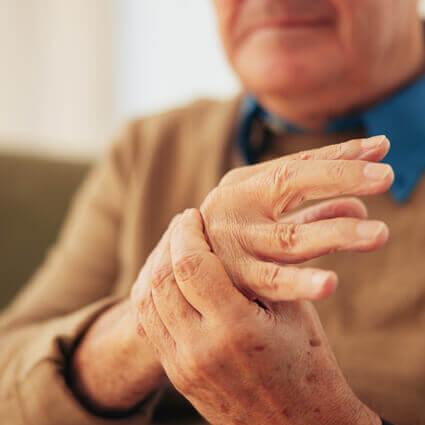
 A common problem that we see in our practice from all of the decades of manufacturing that has occurred in our home here in Davidson County, NC community are chronic hand problems from years of sawing, sanding, painting and assembly of furniture. Particularly Dupuyren’s (Palmer) contracture and Stenosing Tenosynovitis commonly called “Trigger Finger” .
In a previous blog post we talked about a treatment technology we utilize as an alternative method to treat without invasive procedures. Throughout the years of treating these conditions we have had positive success since they are similar.
These two conditions are similar but slightly different. The Dupuytren’s contraction is of the of the palmer surface of the skin sticking together or an adhesion, which usually results in deformity of the finger position of the Palmer surface of hand. In contrast trigger finger affects the interior part of the tendon, which can make the finger difficult and painful to move and also can stick or lock in an open or closed position. and painful to move.
Both of these are inflammatory processes or either direct damage or chronic repetitive over straining which will cause the tissue to fail and heal in a thickened state. In the Palmer contractures they typically are the base layer of skin sticking to itself or other tissues. As for trigger finger it is more like a bicycle brake cable.
The cable has an outside “sheath” and the internal moving part/wire (tendon). When the internal tendon is damaged it can inflame and “wad up” which gets stuck inside the sheath and then “Snaps” through a portion of the sheath. Both are very painful.
There is a little bit of overlap and have found clinically, were a contracture of the Palmer tissue can stick/be adhesive to a tendon-sheath, therefore creating a new type of problem halfway in between both of these.
The good news is that the protocol we have developed can help all three simultaneously.
Our approach uses extra-corporal compression way of therapy or shock wave, along with combination of Class IV laser and manual therapy.
An important part of the treatment is also home therapy with the utilization of stretching, kinesio taping to hold the joint in better position and to create tension to hold it open, as well as icing and pain rubs for symptoms.
Working together in office and home over a short treatment cycle we typically see significant improvements which can help heal overtime and can return function of the hand back closer to a normal range of motion and strength.
It has given us confidence as an alternative to surgery and injections in helping people recovery there lost function and reduce pain.
Stay well.
Dr. Philip A. Mahan, D.C., C.C.E.P.